The world is changing.
We've been hearing about global warming and climate change for years. There are, of course, many consequences of this disaster that scientists around the world have been telling us about.
As temperatures change, different ecosystems will be unable to evolve with the change and species of flora and fauna will die out.
Ice caps will melt and sea levels will rise, forever changing the landscape.
Food and water shortages will put the human race in dire straights, and WE COULD BE IN THE SIXTH GREAT EXTINCTION ALREADY!
Yes, yes, Science. We get it. The sky is falling.
But here's a thought... maybe the sky isn't falling fast enough. Maybe we should speed things up a bit. Frack that oil. Deregulate pollution standards. Let the Republicans dismantle all environmental protections so they can get to those valuable mineral deposits and what not that they've had their eyes on for years.
What is this madness? You say. BLASPHEMY!
Now hear me out before you sacrifice me on the Alter of Common Sense.
Let's stop for a minute and really think about what we are saving.
People have always been divided. But never more so than these days of social media and connectivity, where any idiot with a keyboard can spew their brand of hate and vitriol. Trolls that live just to stir up trouble. "Victims" of every possible combination of what they consider to be slights against them.
We have the obvious hate groups, of course. KKK, Westboro Baptist, ISIS. People so oblivious to others that they are willing to threaten, abuse and even kill so they can force others into their beliefs.
We have relatively new groups formed to protect their own status quo, regardless of how ridiculous that status quo is. Men's rights groups, upset that women are finally getting equal treatment under the law. "Christian" groups that are fighting for their supposed religious freedoms, though those freedoms have never been in harms way in this country. Groups that see change coming and somehow feel it will have a negative impact on their lives, when in reality it will have zero impact on how they want to live.
But we also have groups that, while once forces for positive change, seem to have devolved into playing the blame game for their every problem. Feminists turning against each other because of skin color. People of Color demanding that ALL white people are to blame for the historical traumas placed on them. They don't propose solutions anymore. They just gripe about how everyone is against them.
Now, to be fair, not all feminists or POC's or other people in these once excellent organizations fall into this extremism. But it seems that the increasingly extremist factions of these groups are getting more and more air time, and the logical, rational people in those groups are having their voices drown out by the outrage and indignation of the more extreme members.
Hate seems to be the easiest route for most people to take, because it is so very easy to let oneself feel slighted and offended about pretty much anything. It is easier to let rage take over and explode about your issue than to sit and have calm, reasonable discussions to find solutions. It is easier to get on your iPhone and post something about how outraged you are, than to actually get out into the community and DO something about it. It is easier to demand that your way is the ONLY way and dig your heels in than to find common ground and compromise.
There are few solutions presented anymore that would actually benefit all of the inhabitants of this planet, flora and fauna alike. When one hears of ideas to "combat" this problem or that issue, it nearly always involves sacrifices to be made by others that the presenting entity deems to be against them, with very little to no sacrifice from that entity.
Some, of course, are legitimate arguments. The police need to be policing themselves, and need to get back to "protect and serve" instead of believing that they are the law, judge, jury and executioner. Systemic racism, poverty, injustice - all need to be addressed. We need to curb our greed and stop destroying the air and water and land for profits.
Unfortunately the only solutions many can come up with begin with the phrase "If only..."
If only black people would stop being angry.
If only white people would admit they are inherently racist.
If only poor people would work harder.
If only all guns were outlawed.
If only people were not so greedy.
People these days expect a single, magic bullet solution to problems. But when things get complicated, which they inevitably do, rational discussion breaks down into a blame game, hurt feelings, hatred and vitriol for the "other side". When our leaders act like petulant children who would rather have a tantrum if they don't get their way, how do we expect their followers to behave any differently?
Which brings me back to climate change.
Think about what it is that seems to bring people together. It isn't anything human made. But when you have a good old natural disaster, it brings out the humanity in most people.
Floods, tornadoes, earthquakes, tsunamis. Suddenly everyone wants to "help out their fellow man" (and woman, of course).
Wallets and purses are suddenly opened to help those facing a crisis. News reports show the devastation and destruction, and most people are ready to do what it takes to alleviate the suffering of others. People travel to the devastated area to help rescue, recover, rebuild.
Of course their are the jerks that will try and profit off of it, the lawless factions that will take advantage of others. Deaths caused by everything and anything in the destruction zone. There are down sides to disaster.
But if we could speed up climate change. Make it an acute threat to the world. Maybe, just maybe, people would start to take it seriously and realize "Oh crap. This really IS a threat to my life, and the lives of my children and grandchildren!"
Maybe people would open wallets and purses to do what it takes to alleviate some of the consequences of climate change.
Maybe people would come together and realize that regardless of gender or skin color or sexual preference or politics, or anything else that divides us, that we are ALL in this together, and what is good for some, is usually good for all. And what is bad for some, is usually bad for all.
Maybe those who seek to divide us and turn those "like" us against those "unlike" us will finally wake up and see just how destructive their attitudes and behaviors are.
Maybe we would finally understand that we should live our lives as if this is the ONLY planet we get. The ONLY chance we have to continue life on this world. That our actions DO have consequences that will come back around and not just bite us in the butt, but wipe us from existence.
Of course, this comes with a price. People would need to be willing to make sacrifices for others. We would ALL have to do this, not just some. Humanity would have to live up to its BEST potential. And as we can see pretty clearly, humanity has a long, long way to go for a majority of the human population to behave like that.
So bring on climate change. Faster and faster. With the change being slow, humans will continue to focus on themselves as individuals. As small groups of like minded people that MUST fight against other groups that look different or think different from them. More money, more power, more infighting like dogs over table scraps. With more rapid change, maybe more people will come together and start doing what is right for EVERYONE and EVERYTHING.
It is a race right now to see what will happen first. Can we evolve into a higher thinking species before we destroy life as we know it? Or are we better off going extinct and letting the planet heal itself over time?
Humans aren't an endangered species. We wipe out more species than all other group of animals and plants combined. Humans are the greatest single threat to life on this planet that has EVER existed. But humans also have the potential to do wonderful, amazing things that could make life on this planet - and even other planets - great.
It will be easy to let the world go to pot. We are on that easy road now. Fast food, cheap gas, using up our unsustainable resources at an amazingly fast pace. Doing things the inefficient way to save money for some. Doing things the old ways because "that's how it has always been done."
We avoid doing things the hard way, because that REQUIRES sacrifice.
Look at the Honey Bee. Honey bee populations are being decimated by Varroa mites and neonicotinoids. But we continue to breed bees that are susceptible to Varroa and treat them as best we can with chemicals, and we continue to use neonicotinoids on crops because to do otherwise would require sacrifice. The bee population would shrink significantly if we only let the Varroa resistant bees live. That would impact the honey producers profits, the food producers profits, and could cause a food shortage for a time that would increase prices for consumers. Financial sacrifice that society is unwilling to make. Same with the neonicotoids. Smaller crops due to disease would impact the farmers profits and raise prices for consumers. Just the threat of the griping and whining from their constituents, and the threat of not being re-elected because of it, keeps leaders from making the hard decisions to do what is right.
China doesn't have any honey bees, because they have literally destroyed the food chain that the bees live in. They do all of their pollination by hand. That works over there because they live in a dictatorship and have billions of people. Do you think that would even be feasible in the U.S.? No. not at all.
Yet we continue to do what is easy instead of what is right. Because we, as humans - not just Americans, but worldwide - believe that sacrifice is better forced upon something or someone else so that WE can live easier, rather than taking on that sacrifice as a whole for the betterment of all.
It's a race alright. Between the easy path to global chaos and destruction - which humanity may not survive, but the planet will, and the hard path to make sacrifices for each other, the plants and animals, the air and the water, for the betterment of all.
I want to root for the hard path, because in the long run it would benefit my children's children and beyond. But I think that too many are firmly committed to the easy path because, well... It's easier. Maybe that is what would be best for the planet in the long run.

My Dog Shoba
Friday, July 24, 2015


Thursday, July 23, 2015
Flap...The Update
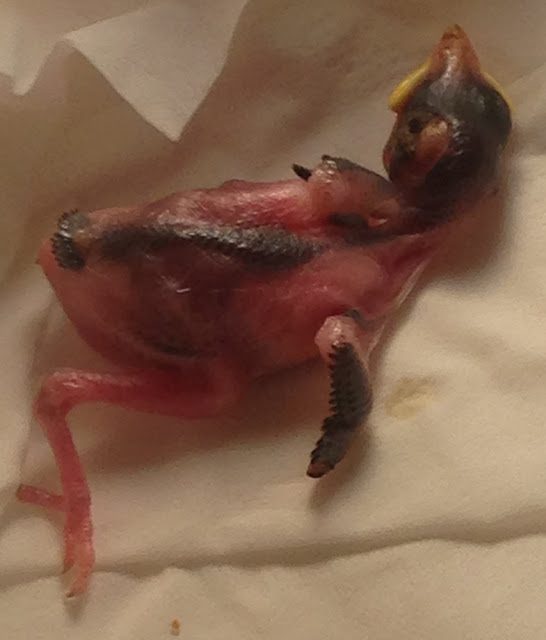
Remember this guy from a couple of posts ago?
 When last we left off, we were feeding it every twenty minutes like clockwork. The days were a blur. I was so...so...so very tired. The wife did some of the feedings. I even taught the kids to feed it and caught short naps during the day.
Every night when we sent the kids to sleep, we had them say goodbyes to the little thing figuring it would not survive until morning. Yet every morning, little flap would greet us with little chirps and gaping mouth, just waiting for breakfast.
So I took pictures as Flap changed each day. And with each passing day I got more and more attached to the little guy (or girl). So here, in pictures, is a little log of our miracle bird...



Flap turned five weeks old today. I have a great many more pictures, but I won't post them here. We still don't know if it is male or female, and won't until it gets it's adult plumage. I'm not sure when that will be, but our family is split on what we think it is. I call it a he, kids think it might be a she. I guess we will see!


Every night when we sent the kids to sleep, we had them say goodbyes to the little thing figuring it would not survive until morning. Yet every morning, little flap would greet us with little chirps and gaping mouth, just waiting for breakfast.
So I took pictures as Flap changed each day. And with each passing day I got more and more attached to the little guy (or girl). So here, in pictures, is a little log of our miracle bird...
Day 3

Day 4

Day 5.
.. seriously...lots of growth overnight!

Day 6.
Growing like a weed.

Day 7.
What a difference a week makes!

Day 9.
Snuggly

Day 11.
Fluffy and snuggly

Day 13
Still sitting still for feedings

Only two weeks old!

Day 18
Last day Flap would sit on my hand for feeding

Day 21
Feeling all grown up, so Flap prefers to be fed standing on something other than me.

Flap turned five weeks old today. I have a great many more pictures, but I won't post them here. We still don't know if it is male or female, and won't until it gets it's adult plumage. I'm not sure when that will be, but our family is split on what we think it is. I call it a he, kids think it might be a she. I guess we will see!
Tuesday, June 23, 2015
Flags of our Fathers
There has been a lot of talk of flags since the shooting in Charleston. Specifically what some call the "confederate flag" from the US Civil War.

The flag for the CSA looked like this for most of the war...

It was actually known as the "Stars & Bars"
What everyone seems to refer to as the "Confederate Flag" was actually used for the confederate navy. Which didn't even use that design initially. the first CSA navy flag looked like this...

There was a battle flag of the Army of Virginia that looked like this...
 A little square thing. But the closest the battle flag got to being the CSA representative was as a little corner piece of the next CSA flag, known as "The Stainless Banner".

Just the little battle flag on a field of white. Remember that, we'll get back to it.
So when you hear people say that the Confederate Flag is "a part of our heritage" and they are waving this...


Last part of the flag lesson is this... What is now known as the confederate flag...
was used by the KKK in the sixties as a symbol of white supremacy. That's right kids, a white supremacist hate group chose this flag to rally their troops because they believed themselves to be superior to all others who are not of their race.

Long ago, when I was a gung ho Marine, I got into an argument with my dad about the US flag. I told him I was willing to die to protect the flag. To grab it away from those who would burn it or trample it. NO ONE WOULD DESECRATE MY FLAG!
 And Dad told me something that not only changed my perspective, but still rings true today.
The flag? Any flag? Is only a piece of cloth.
It is only a piece of cloth.
It is the ideas and ideals that the flag stands for that are important.
Is our country perfect?
Most decidedly not.
But the ideals of the US? The things we could be? Those are amazing. Elections not marred by violent coups. The idea that all people are created equal. That we should have liberty and justice for all. Yeah, those are worth fighting for.
You want to stomp on the US flag or burn it? OK. It's just a piece of cloth. But if you take up arms against it, like the CSA did, then yes, we will have a problem.
So let's take another look at the Confederate flags... not in pictures, but in ideas and ideals.
What do they stand for?
Well, the arguments you'll hear from supporters are that they are a part of southern heritage. They stand for standing up for your rights, for state rights. They are a symbol of rebellion against all that would take away their freedoms!
 But peel back that layer of cloth and look underneath.
What rights were they wanting to defend?
-The right to own slaves. To use other human beings as work animals to bring in their crops.
What "heritage" are they wanting to glorify and remember"
-The heritage of the Antebellum South, where the rich white folk lived in luxury...due to the fact that they had slaves doing all of the work for them. So again, slavery.
What freedoms did the Federal Government want to take from those oppressed southern states?
-The freedom to own and use human beings as farm animals. Slavery.
John Adams said that "Facts are stubborn things." Whether you want to admit it or not, whether you want to believe it or not, facts are.
Re-imagining history does not nullify the true history. The so called "confederate states" committed treason against the United States, using armed uprising. Those who fought on the side of the confederacy were traitors to the United States.
You will hear some say that they were all Americans just fighting for what they believed in. That it was really just about states rights. That after the war they were all friends again and even met on the battlefields to commemorate their fallen.
Yes, they were all Americans. But some of them were traitors. Yes, it is commonly sold in the south as a battle for states rights. But it was the right to slavery that they were fighting for. And yes, they did meet after the war to commemorate the fallen. That happens after many wars. WWI, WWII, Korea, Vietnam. US and "enemy" combatants meet on old battlefields and talk of the war.
But none of that eliminates the things that started those wars. Pearl Harbor. The 38th parallel. Our own hubris at wanting to "stop communism". All led us to war. And the CSA fighting for the right to own slaves started our Civil War.

I have travelled all over this country. I have seen "confederate" flags flown and adorning vehicles and t-shirts. I believe that those who fly or defend the use of those flags are either too deluded or too stupid to realize the truth that lies behind that piece of cloth. Sure, it is a cool looking flag. If I didn't have any concept of history, I would think it was a cool flag.
But the simple and inevitable truth is that it is flag that represents hate. I don't think it should be outlawed though. Flying a flag is a great way to show exactly what you stand for. I fly the US flag because I believe in what we can be. Not because I blindly follow a piece of cloth. But I am against flying any confederate flag over state or federal buildings. Not because I am against state pride. I love being a native Iowan. But because the confederates were traitors, and they lost the war. Their flags are symbols of all that is wrong with that era, not anything that was right.
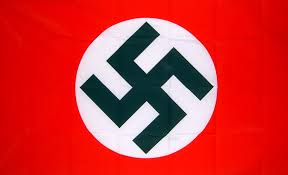 We can do better in this country. We should not be flying the flags of hatred.
Stars & Bars?
It has a storied history to be sure, but not a very good one. Some claim it is the confederate flag of the Confederate States of America, or CSA. But here's the thing... it isn't. Let's do a quick history...The flag for the CSA looked like this for most of the war...
It was actually known as the "Stars & Bars"
What everyone seems to refer to as the "Confederate Flag" was actually used for the confederate navy. Which didn't even use that design initially. the first CSA navy flag looked like this...

There was a battle flag of the Army of Virginia that looked like this...
Just the little battle flag on a field of white. Remember that, we'll get back to it.
So when you hear people say that the Confederate Flag is "a part of our heritage" and they are waving this...
In the Navy
Then you know for a fact that they have no clue about Southern heritage in the civil war era. Especially in South Carolina, as the flag that flew over the rebel forces during the siege of Fort Sumter, which as you might recall started the whole thing, was called the "Bonnie Blue Flag" and looked like this...Last part of the flag lesson is this... What is now known as the confederate flag...
was used by the KKK in the sixties as a symbol of white supremacy. That's right kids, a white supremacist hate group chose this flag to rally their troops because they believed themselves to be superior to all others who are not of their race.
sound familiar?
Long ago, when I was a gung ho Marine, I got into an argument with my dad about the US flag. I told him I was willing to die to protect the flag. To grab it away from those who would burn it or trample it. NO ONE WOULD DESECRATE MY FLAG!

'Murica!
The flag? Any flag? Is only a piece of cloth.
It is only a piece of cloth.
It is the ideas and ideals that the flag stands for that are important.
Is our country perfect?
Most decidedly not.
But the ideals of the US? The things we could be? Those are amazing. Elections not marred by violent coups. The idea that all people are created equal. That we should have liberty and justice for all. Yeah, those are worth fighting for.
You want to stomp on the US flag or burn it? OK. It's just a piece of cloth. But if you take up arms against it, like the CSA did, then yes, we will have a problem.
So let's take another look at the Confederate flags... not in pictures, but in ideas and ideals.
What do they stand for?
Well, the arguments you'll hear from supporters are that they are a part of southern heritage. They stand for standing up for your rights, for state rights. They are a symbol of rebellion against all that would take away their freedoms!
'Murica?
What rights were they wanting to defend?
-The right to own slaves. To use other human beings as work animals to bring in their crops.
What "heritage" are they wanting to glorify and remember"
-The heritage of the Antebellum South, where the rich white folk lived in luxury...due to the fact that they had slaves doing all of the work for them. So again, slavery.
What freedoms did the Federal Government want to take from those oppressed southern states?
-The freedom to own and use human beings as farm animals. Slavery.
John Adams said that "Facts are stubborn things." Whether you want to admit it or not, whether you want to believe it or not, facts are.
Re-imagining history does not nullify the true history. The so called "confederate states" committed treason against the United States, using armed uprising. Those who fought on the side of the confederacy were traitors to the United States.
You will hear some say that they were all Americans just fighting for what they believed in. That it was really just about states rights. That after the war they were all friends again and even met on the battlefields to commemorate their fallen.
Yes, they were all Americans. But some of them were traitors. Yes, it is commonly sold in the south as a battle for states rights. But it was the right to slavery that they were fighting for. And yes, they did meet after the war to commemorate the fallen. That happens after many wars. WWI, WWII, Korea, Vietnam. US and "enemy" combatants meet on old battlefields and talk of the war.
But none of that eliminates the things that started those wars. Pearl Harbor. The 38th parallel. Our own hubris at wanting to "stop communism". All led us to war. And the CSA fighting for the right to own slaves started our Civil War.
Symbolically - fighting for the right of slavery for all whites
I have travelled all over this country. I have seen "confederate" flags flown and adorning vehicles and t-shirts. I believe that those who fly or defend the use of those flags are either too deluded or too stupid to realize the truth that lies behind that piece of cloth. Sure, it is a cool looking flag. If I didn't have any concept of history, I would think it was a cool flag.
But the simple and inevitable truth is that it is flag that represents hate. I don't think it should be outlawed though. Flying a flag is a great way to show exactly what you stand for. I fly the US flag because I believe in what we can be. Not because I blindly follow a piece of cloth. But I am against flying any confederate flag over state or federal buildings. Not because I am against state pride. I love being a native Iowan. But because the confederates were traitors, and they lost the war. Their flags are symbols of all that is wrong with that era, not anything that was right.
Fly them if you believe in what they stand for
Sunday, June 21, 2015
The Birds and the Bees
Well. For Father's Day this year I had to have that all important talk about the birds and the bees with my kiddos.
Of course, in our house, nothing is normal - so we have been talking about birds and bees quite literally in the past few days.
Our latest bee hive checkup showed that our beloved Queen Beatrice had abdicated the throne. The Boyo now suits up with me to check on the Girls on the Hill, and as we looked through our hive, we noticed plenty of capped brood, but no babies in larval stage. Which means the Queen isn't laying eggs, which means she's either dead or out of the hive.
We did see some bees emerging from their comb, which was really cool to see for the first time ever in real life!
But no Queen and no babies. I went ahead and scraped off the burr comb - that is, comb that the bees have made off of the frames that are there for them to build on. As I scraped off one particularly thick patch that was connecting the upper brood box to the lower brood box, I scraped straight through a bunch of capped larvae, and noticed a thick, Elmer's glue looking goo. In reflecting on that later, I came to the realization that I had scraped right through the next queen. The glue goo was royal jelly surrounding her, and she was probably less than a week from emerging.We thought for sure that this spelled the end of beekeeping this year, as a queen-less hive is pretty much dead.
Fortunately, one of our local beekeeper contacts had a spare "nuc", which is basically a mini-colony that includes a laying queen, and bees from eggs to adults. We added this on Friday and I am already anxious for next weeks hive check to see how things are going! Fingers and toes are crossed.
Now, for the birds...
On Thursday we were picking up paint to paint one of our rooms. Little Sweet Pea is growing fast and we are moving her into the larger "office" room, and converting her smaller bedroom into our family command center.
I went for a quick walk through the garden to check the plants and make sure all was well. (It was) The Boyo was following me when he suddenly stopped and pointed at the ground. "Toad! I mean.. Chick! Chick!"
I turned around, a bit confused, and saw what he was pointing at. It was a baby bird. It looked as if it had been out of the shell for maybe a day. Two at the most. It had split skin on it's head and was looking quite dead.
"Yeah, buddy. I think that is dead." I told him.
Of course the bird chose that moment to weakly lift it's head and flop back into the dirt.
"Dad! We have to save him!"
Now, I've rescued a LOT of birds in my years. I know for a fact that birds this young will die pretty quick without their families. So I suggested we just return it to the nest it came from. We do have several birdhouses in the yard after all, and it was likely that it was from one of those.
So I checked the locals. One was empty. One had eggs. The last one had babies decidedly older than this little fleshy thing. I looked around for wild bird nests. I looked for circling predators wondering if it had been carried here by a crow or a jay or something. I found no certain signs for a place to return it to.
I took it into the shop and sat with it for a bit.
It was so small. So new. I know from experience that it is a long shot that it will survive even if we take it in. The wound on it's head is threatening it's left eye, and if that doesn't heal, the bird would not be releasable into the wild anyway. I considered quickly snapping it's neck to spare it from suffering.
"Dad! We have to save him!"
Oh crap. The guilt I would have... The guilt I would be subjected to from my children if I didn't try...
"OK little bird." I told it. "I'll give it a shot. But you'd better do your thing one way or another pretty fast. If you are going to die, do it tonight. Otherwise you better fight to live."
So I built a makeshift incubator to keep it warm and decided that if it survived the night, we'd look into feeding it.

The children were at once fascinated, and appalled by the featherless, bulging mass of skin and limbs. They both wanted to sleep in the room with it, but we convinced them that it needed quiet and rest. I explained to them flat out that the chances of this bird surviving the night were slim to none, and that they should be ready for it to be dead when we awoke. They tearily said they understood and headed to bed. After they went to sleep, I pulled out all my old wildlife rehab books and read up on rearing hatchlings. I got a quick picture of it, said a prayer, and went to bed.

To my happy surprise, the little thing was still breathing when I checked on it early Friday morning. It was hungry, so the kids and I headed out to collect feeding supplies. We got some mealworms from a pet shop, and started soaking some dog food.
Now, my kids are about as big on bugs as I am (really - only like dragonflies, don't wanna touch any others) but they pitched right in chopping up mealworms to feed their new ward.
After trying a syringe to feed it, we settled on tweezers. It is too small for a little syringe, as the food would have to be very liquid to fit through the hole in it. Tweezers allowed us to feed it the moistened dog food, which was all the fluid it needs, and lots of good proteins and nutrients as well.

After spending Friday feeding every 20 minutes until sundown, we once again said a little prayer that it would survive the night, and went to bed.

Saturday morning came early, and once again the little bird had survived the night.
Another day of feeding every 20-30 minutes commenced. I was able to teach both of the kiddos proper feeding techniques for newly hatched birds. The Boyo can do it on his own now, and my little Sweet Pea is rapidly improving! We got into a good routine where the Boyo would chop mealworms, I would feed it the worm bits and mushy dog food, and the Sweet Pea changed the Kleenex in the "nest" to keep things tidy.
During the day, I changed my prognosis of the bird from poor to guarded. I could see how much the kids had already fallen in love with the little thing, and I didn't want to get my hopes up too much. The Wife and the kiddos decided a name would probably be in order, and after tossing around many, many ideas, we finally decided to call it Flap.
We went to bed exhausted again from the care of little Flap, and I said another prayer that it would live.
This morning, Flap was still going strong. It has developed quite a bit in the past few days. Itty bitty feathers are starting to erupt from it's wings, and a little bump on it's butt is starting to develop into a tail, complete with little pin feathers of it's own.

I was initially thinking that we would have to take it up to the Wildlife Rehab center, as it is illegal under the Migratory Bird Treaty Act to have wild birds. But I'm pretty sure this is a baby House Sparrow, which - although extremely common - is actually a non-native bird in our country, and like the Starling, is not protected under that law. If I had had no training in wildlife rehab, I would have already delivered it. But since I was trained, and I know what I'm doing, I think we are going to try and raise little Flap. If it's eye doesn't heal, it may not be releasable. But we'll cross that bridge when we come to it.
For now, we'll keep feeding it every 20 minutes or so, and see how things progress in the next few days and weeks.

Ah, the birds and the bees...Shaffer style.
Of course, in our house, nothing is normal - so we have been talking about birds and bees quite literally in the past few days.
Our latest bee hive checkup showed that our beloved Queen Beatrice had abdicated the throne. The Boyo now suits up with me to check on the Girls on the Hill, and as we looked through our hive, we noticed plenty of capped brood, but no babies in larval stage. Which means the Queen isn't laying eggs, which means she's either dead or out of the hive.
We did see some bees emerging from their comb, which was really cool to see for the first time ever in real life!
But no Queen and no babies. I went ahead and scraped off the burr comb - that is, comb that the bees have made off of the frames that are there for them to build on. As I scraped off one particularly thick patch that was connecting the upper brood box to the lower brood box, I scraped straight through a bunch of capped larvae, and noticed a thick, Elmer's glue looking goo. In reflecting on that later, I came to the realization that I had scraped right through the next queen. The glue goo was royal jelly surrounding her, and she was probably less than a week from emerging.We thought for sure that this spelled the end of beekeeping this year, as a queen-less hive is pretty much dead.
Fortunately, one of our local beekeeper contacts had a spare "nuc", which is basically a mini-colony that includes a laying queen, and bees from eggs to adults. We added this on Friday and I am already anxious for next weeks hive check to see how things are going! Fingers and toes are crossed.
Now, for the birds...
On Thursday we were picking up paint to paint one of our rooms. Little Sweet Pea is growing fast and we are moving her into the larger "office" room, and converting her smaller bedroom into our family command center.
I went for a quick walk through the garden to check the plants and make sure all was well. (It was) The Boyo was following me when he suddenly stopped and pointed at the ground. "Toad! I mean.. Chick! Chick!"
I turned around, a bit confused, and saw what he was pointing at. It was a baby bird. It looked as if it had been out of the shell for maybe a day. Two at the most. It had split skin on it's head and was looking quite dead.
"Yeah, buddy. I think that is dead." I told him.
Of course the bird chose that moment to weakly lift it's head and flop back into the dirt.
"Dad! We have to save him!"
Now, I've rescued a LOT of birds in my years. I know for a fact that birds this young will die pretty quick without their families. So I suggested we just return it to the nest it came from. We do have several birdhouses in the yard after all, and it was likely that it was from one of those.
So I checked the locals. One was empty. One had eggs. The last one had babies decidedly older than this little fleshy thing. I looked around for wild bird nests. I looked for circling predators wondering if it had been carried here by a crow or a jay or something. I found no certain signs for a place to return it to.
I took it into the shop and sat with it for a bit.
It was so small. So new. I know from experience that it is a long shot that it will survive even if we take it in. The wound on it's head is threatening it's left eye, and if that doesn't heal, the bird would not be releasable into the wild anyway. I considered quickly snapping it's neck to spare it from suffering.
"Dad! We have to save him!"
Oh crap. The guilt I would have... The guilt I would be subjected to from my children if I didn't try...
"OK little bird." I told it. "I'll give it a shot. But you'd better do your thing one way or another pretty fast. If you are going to die, do it tonight. Otherwise you better fight to live."
So I built a makeshift incubator to keep it warm and decided that if it survived the night, we'd look into feeding it.

The children were at once fascinated, and appalled by the featherless, bulging mass of skin and limbs. They both wanted to sleep in the room with it, but we convinced them that it needed quiet and rest. I explained to them flat out that the chances of this bird surviving the night were slim to none, and that they should be ready for it to be dead when we awoke. They tearily said they understood and headed to bed. After they went to sleep, I pulled out all my old wildlife rehab books and read up on rearing hatchlings. I got a quick picture of it, said a prayer, and went to bed.

To my happy surprise, the little thing was still breathing when I checked on it early Friday morning. It was hungry, so the kids and I headed out to collect feeding supplies. We got some mealworms from a pet shop, and started soaking some dog food.
Now, my kids are about as big on bugs as I am (really - only like dragonflies, don't wanna touch any others) but they pitched right in chopping up mealworms to feed their new ward.
After trying a syringe to feed it, we settled on tweezers. It is too small for a little syringe, as the food would have to be very liquid to fit through the hole in it. Tweezers allowed us to feed it the moistened dog food, which was all the fluid it needs, and lots of good proteins and nutrients as well.

After spending Friday feeding every 20 minutes until sundown, we once again said a little prayer that it would survive the night, and went to bed.

Saturday morning came early, and once again the little bird had survived the night.
Another day of feeding every 20-30 minutes commenced. I was able to teach both of the kiddos proper feeding techniques for newly hatched birds. The Boyo can do it on his own now, and my little Sweet Pea is rapidly improving! We got into a good routine where the Boyo would chop mealworms, I would feed it the worm bits and mushy dog food, and the Sweet Pea changed the Kleenex in the "nest" to keep things tidy.
During the day, I changed my prognosis of the bird from poor to guarded. I could see how much the kids had already fallen in love with the little thing, and I didn't want to get my hopes up too much. The Wife and the kiddos decided a name would probably be in order, and after tossing around many, many ideas, we finally decided to call it Flap.
We went to bed exhausted again from the care of little Flap, and I said another prayer that it would live.
This morning, Flap was still going strong. It has developed quite a bit in the past few days. Itty bitty feathers are starting to erupt from it's wings, and a little bump on it's butt is starting to develop into a tail, complete with little pin feathers of it's own.

I was initially thinking that we would have to take it up to the Wildlife Rehab center, as it is illegal under the Migratory Bird Treaty Act to have wild birds. But I'm pretty sure this is a baby House Sparrow, which - although extremely common - is actually a non-native bird in our country, and like the Starling, is not protected under that law. If I had had no training in wildlife rehab, I would have already delivered it. But since I was trained, and I know what I'm doing, I think we are going to try and raise little Flap. If it's eye doesn't heal, it may not be releasable. But we'll cross that bridge when we come to it.
For now, we'll keep feeding it every 20 minutes or so, and see how things progress in the next few days and weeks.

Ah, the birds and the bees...Shaffer style.
Thursday, May 28, 2015
Do Bee Do Bee Do
Just completed the second hive check on our little swarm on the hill. The good news is, I think everything is going well! The bad news is, I am still new enough that I doubt I'd be able to see a problem before it got really big.

The good news there is that we have a thriving beekeeper community around here, and there are many people to go to with questions and concerns. One of the local honey makers - The Bee Shed - is having a workshop this Sunday on what to look for during a hive inspection, so that will be very helpful!
Today, since I've got bees on the brain, I thought I'd give a short primer on bees, just so people can get to know these fascinating little wonder creatures.
First off, nearly everyone knows that bees are major pollinators. That is, they help farmers grow the crops that feed us. Two-thirds of our fruits and vegetables are pollinated by bees, so they are pretty important to us humans.
Second, honeybees that help us are having some major problems these days thanks to chemicals used on crops to try and keep pests away. Neonicotinoids in particular are having a devastating effect on bee populations.
But let's delve a little into the life cycle of bees, just for fun. Because I'm betting there are lots of things that may surprise you about honey bees. I know I have learned a ton about these girls since adopting a family of them. And the more I learn, the more and more I respect and admire the honey bee!

For instance, the average worker bee is always female, and only lives around six weeks during the busy warm season. It takes 21 days for an egg to grow into a newly hatched worker bee, and then the new bee spends the next three weeks in the hive doing various jobs like nursing the growing brood, cleaning and maintaining comb, taking dead bees out of the hive, fanning the nectar to make honey, taking care of the queen, even a stint as a guard bee.
The last three weeks of life for a warm weather bee is spent flying free, looking for nectar and picking up pollen, and bringing it back to the hive, where it passes the goodies off to younger bees to store. bees at this stage will quite literally work themselves to death. Single minded in their mission to provide for the future of the colony.
When the weather gets cold, the bees stop flying and form a clump around the queen to keep her warm. Queens like it hot - around 90 degrees fahrenheit, so the winter bees have to shiver a lot to produce heat. The winter workers can live for a few months, so that helps get them through the cold season. It also takes a LOT of stored honey for the winter bees to eat to keep up the energy expended in heating the queen. We are aiming for at least 100 pounds of honey for our hive before winter hits. More if they will make it. We may not even harvest any honey this first year, just to help our new colony along as much as possible.
So, in a nutshell, the "Summer Bees" spend their lives making honey for the "Winter Bees" to get through the cold. And the Winter Bees survive the cold so that the Summer Bees can pollinate and make honey! Pretty cool, huh.
We have had our hive for about a month now, so in another few weeks, all of the bees in it except the queen will have been born in our back yard.
As for the Queen, she can live for 3 or 4 years, and after her mating flight (where she mates with many male - or drone - bees) she spends the rest of her life fertile and laying up to a couple thousand eggs EVERY DAY. That's a high turnover rate once the cycle is in full swing. Our hive, if it stays happy and healthy, should have around 50 - 75,000 bees buzzing around, doing their thing. The numbers will drop in the winter as they ball up to keep the queen warm.
During both of my hive inspections thus far I have seen baby bees in every stage of development, from tiny egg, to plump larva it goes through what are called instars. basically stages of development where you can kind of tell how old it is based on size ...

This picture has everything from egg (little tiny dots) to little larvae and medium sized larvae, right up to full grown larvae (maggot looking things) and even some capped brood - when the baby is called a pupa and does her final developing before emergence.
Now, for the record, I was a bit terrified of doing the first hive check. After all, 15,000 little bees means 15,000 little stingers, and I have a healthy aversion to pain. But spending the time around them that I have, I have found our bees to be remarkably gentle in their behavior towards me. They seem content to go about their business as I pull frames and look them over, and don't seem to mind being moved around as long as I am gentle. I will admit that it has sometimes taken every bit of effort and control not to swing wildly at the ones flying too near me and run off screaming... but I am getting better with each encounter. I am certain I will be stung at some point, but so far - not once!
Next time I go inspect, I'll take more pictures and get a little more in depth into their behaviors and other interesting things about them.
More Later

The good news there is that we have a thriving beekeeper community around here, and there are many people to go to with questions and concerns. One of the local honey makers - The Bee Shed - is having a workshop this Sunday on what to look for during a hive inspection, so that will be very helpful!
Today, since I've got bees on the brain, I thought I'd give a short primer on bees, just so people can get to know these fascinating little wonder creatures.
First off, nearly everyone knows that bees are major pollinators. That is, they help farmers grow the crops that feed us. Two-thirds of our fruits and vegetables are pollinated by bees, so they are pretty important to us humans.
Second, honeybees that help us are having some major problems these days thanks to chemicals used on crops to try and keep pests away. Neonicotinoids in particular are having a devastating effect on bee populations.
But let's delve a little into the life cycle of bees, just for fun. Because I'm betting there are lots of things that may surprise you about honey bees. I know I have learned a ton about these girls since adopting a family of them. And the more I learn, the more and more I respect and admire the honey bee!

For instance, the average worker bee is always female, and only lives around six weeks during the busy warm season. It takes 21 days for an egg to grow into a newly hatched worker bee, and then the new bee spends the next three weeks in the hive doing various jobs like nursing the growing brood, cleaning and maintaining comb, taking dead bees out of the hive, fanning the nectar to make honey, taking care of the queen, even a stint as a guard bee.
The last three weeks of life for a warm weather bee is spent flying free, looking for nectar and picking up pollen, and bringing it back to the hive, where it passes the goodies off to younger bees to store. bees at this stage will quite literally work themselves to death. Single minded in their mission to provide for the future of the colony.
When the weather gets cold, the bees stop flying and form a clump around the queen to keep her warm. Queens like it hot - around 90 degrees fahrenheit, so the winter bees have to shiver a lot to produce heat. The winter workers can live for a few months, so that helps get them through the cold season. It also takes a LOT of stored honey for the winter bees to eat to keep up the energy expended in heating the queen. We are aiming for at least 100 pounds of honey for our hive before winter hits. More if they will make it. We may not even harvest any honey this first year, just to help our new colony along as much as possible.
So, in a nutshell, the "Summer Bees" spend their lives making honey for the "Winter Bees" to get through the cold. And the Winter Bees survive the cold so that the Summer Bees can pollinate and make honey! Pretty cool, huh.
We have had our hive for about a month now, so in another few weeks, all of the bees in it except the queen will have been born in our back yard.
As for the Queen, she can live for 3 or 4 years, and after her mating flight (where she mates with many male - or drone - bees) she spends the rest of her life fertile and laying up to a couple thousand eggs EVERY DAY. That's a high turnover rate once the cycle is in full swing. Our hive, if it stays happy and healthy, should have around 50 - 75,000 bees buzzing around, doing their thing. The numbers will drop in the winter as they ball up to keep the queen warm.
During both of my hive inspections thus far I have seen baby bees in every stage of development, from tiny egg, to plump larva it goes through what are called instars. basically stages of development where you can kind of tell how old it is based on size ...

This picture has everything from egg (little tiny dots) to little larvae and medium sized larvae, right up to full grown larvae (maggot looking things) and even some capped brood - when the baby is called a pupa and does her final developing before emergence.
Now, for the record, I was a bit terrified of doing the first hive check. After all, 15,000 little bees means 15,000 little stingers, and I have a healthy aversion to pain. But spending the time around them that I have, I have found our bees to be remarkably gentle in their behavior towards me. They seem content to go about their business as I pull frames and look them over, and don't seem to mind being moved around as long as I am gentle. I will admit that it has sometimes taken every bit of effort and control not to swing wildly at the ones flying too near me and run off screaming... but I am getting better with each encounter. I am certain I will be stung at some point, but so far - not once!
Next time I go inspect, I'll take more pictures and get a little more in depth into their behaviors and other interesting things about them.
More Later
Thursday, May 7, 2015
Feather II
I volunteer with a group out in South Dakota called Re-Member. If you've read my blog before, you are probably already familiar. If not, in short, it is a group that works on light construction projects in one of the financially poorest counties on the continent. They also do some amazing cultural awareness programs.
Anyway, I am on the Board of Directors as well, and we are in the midst of a capital campaign to build a permanent presence on the Rez to continue our work until we aren't needed anymore. We have finally broken ground at the new location, but we still need financial help to get the project finished. None of the money for Feather II comes from the programs we already run. If you have other questions or want to help financially or with a visit, please contact me! Here is an e-mail that was sent out today...
 Working with the Oglala Lakota Oyate on the Pine Ridge Reservation, S.D. | |
| Hi John,
We're making history at Re-Member, as the first building goes up at Feather II, our new permanent home on Pine Ridge. Our shared goal - to live and work alongside the Oglala Lakota people is being realized - thanks to your help.
 Your support is critical to our efforts, and your support has helped us achieve the milestone we are celebrating today.
Visit our Feather II project page to learn more about the ambitious plans - and dynamic opportunities - that Feather II will bring to our program. Ted Skantze Any help would be great! even at the $5 or $10 a month level, it all adds up! Even sharing the link to this blog post or to the Re-Member website could help. Please take some time to consider what you could do to make a difference today. Thanks friends! | |
Sunday, May 3, 2015
BEE - utiful!
Yesterday, the Boyo and I drove up to Hackensack, Minnesota to pick up our package of bees. It was a four hour drive to get there, filled with great conversation and lots of anticipation. We arrived at the Mann Lake LTD store/factory at 1:00 and were greeted by a swarm of people.
Employees made up about half of the crowd, and people picking up their bees the other half. We were given a receipt and sent to a different part of the property to pick up our package.
There were tables stacked with packages of bees, but surprisingly absent was the loud buzzing I was expecting to hear. Mostly it was the rustle of wings that sounded like softly crinkling cellophane. We were given our package and got on the road. The whole thing took about twenty minutes.

This is our package at home, ready to head up to their hive on the hill. I was quite shocked to learn from the nice people at Mann Lake that our single package contained anywhere between 10,000 and 15,000 bees! Never have I had so many pets, although to be fair I will probably not cuddle them too much.
When we got them home we gave them a spray of sugar water (in the blue topped bottle there in the photo) and got our bee suits on to get them into their hive.
Now. In the grand scheme of things, I don't fear bees. At least not in the ones or twos I usually see them in. And I know full well that they probably, more than likely, almost certainly will not sting me while they are out and about foraging for pollen and nectar and such. But I have never been in the presence of 15,000 of them all huddle together before, and as the Wife and I were on the hill getting ready to introduce them to the hive, my heart was thumping madly!
We uncapped the swarm and pulled out the little queen box. Inside was our Queen, Her Royal Majesty Queen Beatrice Blue. She has a blue dot on her back, making her much more recognizable to new-bees like me. She went into my pocket to keep her warm. Then came the rest of the girls.
My heart was flip flopping as my lovely wife gently poured the mass of buzzing into the hive box. I was skeptical at first when I heard that there were upwards of 15K of these little things in that box, but they poured out like clowns from a car. A seemingly never-ending stream of bustling, buzzing nightmare fuel. Yeah... I had some nerves hitting me at that moment. Even though we had sprayed them down with sugar water to both give them a snack and wet their wings (wet bees don't fly), a small cloud still rose from the box surrounding us as we worked. I believed there were fifteen thousand at that moment, because the bottom of the hive box was awash in little bees, and thousands seemed to be buzzing around us.
My amazing Wife was remarkably calm through the whole thing. She has no fear whatsoever of them. I was truly impressed. So we efficiently closed up the hive and I tried to think what else we needed to do before we left them alone.
Then it struck me... Queen Beatrice was still in her box in my pocket. So we opened the hive again and I carefully hung the queen cage from one of the frames. I had replaced the cork in the end with a marshmallow, giving the workers something to eat while they freed their monarch. We closed it up again and walked away, leaving a great many (to my mind) buzzing around outside.

We put a little grass plug in the "entry reducer" as instructed, to give the queen time to feel at home without leaving. I felt a little nervous about the bees left outside for the night, but when I checked on them this morning they were still bunched up where they are in the picture and seemed pretty happy.
Today it was time to remove the grass plug, check to see if the Queen was free of her cage, and check on their sugar water and pollen patty. I went out by myself this time and as soon as I opened the hive my heart went into overdrive.
Bees. Everywhere. The cloud around me made last nights group look pitiful and weak. The bees seemed to be buzzing quite loudly, and I was certain that they were signaling each other to attack.
As I removed the pollen patty (plenty left, by the way) I watched in dismay as the queen cage sank slowly into the mass of bees between two frames.
I was barehanded, as I had been the evening before, because I can't seem to grasp things well with the gloves on. But I did have the smoker fired up. So I squeezed a few puffs of smoke into the hive, as I've seen others do on TV and YouTube videos I had watched. The bees buzzed louder, but didn't seem to do much of anything else.
I took a deep breath and figured if they were going to sting me anyway, I might as well get the work done. So I carefully removed two frames, checking each one for Beatrice, and set them aside. Then I looked down into the small space and spotted the queen box lying on the bottom of the hive. Between it and me was 9 and 5/8 inches of bee covered frame, just wide enough to stick my hand down into and grab the box. My bare, bare hand. Which looked unnaturally pale and pasty. Which shook ever so slightly with a mixture of adrenaline and fear.
I held my hand over the gap and peered in again. The bees were making chains with their bodies across the gap. Other bees crawled busily across these bee bridges from one side to the next. The gap would be filled with bee bridges in minutes, I thought to myself. So I took a deep breath and held it, prepared for the stinging of my poor hand, and gently pushed my fingers into the breech.
I don't know how many people have felt the sensation of bees on the front and back of their hands. Covering every centimeter. Wiggling and jiggling. Little feet and wings setting off every nerve ending in my outstretched appendage. But let me tell you, it was all I could do not to run screaming. But I did it. I got that little queen box trapped between my two middle fingers and slid it gently out of the hive.
It was empty! Queen Beatrice was loose in the hive somewhere! I peeked in again and by sheer luck of the bee-ginner, I spotted our little queen bustling about on the frame, surrounded by her court who were following her every move. She looked content. The bees around her looked content. I was feeling relieved to have seen her.
I rebuilt the hive and closed it up. Then I went a few feet away, to the stairs leading from the hill, when something amazing happened. (Amazing to me, at least)
Not a single bee followed me, and I had not been stung or attacked the entire time I was on the hill. I pulled off my hood and sat down on the stairs to watch the bees.
The hive was covered. Bees everywhere. There were bees flying in great circles above the hive. Bees crawling at every angle on the hive. Some even buzzed around me. But none attacked.
I have read a LOT on bees since this project started becoming a reality. I read time and time again about how gentle honey bees were, and watched videos of people working bees in short sleeved shirts and hoods. Now I am finding out for myself that the bees are pretty gentle. It is one thing to read about it, another thing entirely to experience it. I am in awe of those little machines. My respect for them, I imagine, will only grow as time goes on and I gain more experience with them.
For now, my job as a beekeeper is to wait a week and let them settle in, then check to see that they are making comb and that Beatrice is laying eggs. The first of many thousands, we hope, that will lead to a strong, healthy colony.
Welcome to our yard little bees! We are glad to have you share the land with us! PS, the garden will be going in soon, so if y'all want to hang around there and pollinate all the veggies, I'd be completely OK with that!
Employees made up about half of the crowd, and people picking up their bees the other half. We were given a receipt and sent to a different part of the property to pick up our package.
There were tables stacked with packages of bees, but surprisingly absent was the loud buzzing I was expecting to hear. Mostly it was the rustle of wings that sounded like softly crinkling cellophane. We were given our package and got on the road. The whole thing took about twenty minutes.
This is our package at home, ready to head up to their hive on the hill. I was quite shocked to learn from the nice people at Mann Lake that our single package contained anywhere between 10,000 and 15,000 bees! Never have I had so many pets, although to be fair I will probably not cuddle them too much.
When we got them home we gave them a spray of sugar water (in the blue topped bottle there in the photo) and got our bee suits on to get them into their hive.
Now. In the grand scheme of things, I don't fear bees. At least not in the ones or twos I usually see them in. And I know full well that they probably, more than likely, almost certainly will not sting me while they are out and about foraging for pollen and nectar and such. But I have never been in the presence of 15,000 of them all huddle together before, and as the Wife and I were on the hill getting ready to introduce them to the hive, my heart was thumping madly!
We uncapped the swarm and pulled out the little queen box. Inside was our Queen, Her Royal Majesty Queen Beatrice Blue. She has a blue dot on her back, making her much more recognizable to new-bees like me. She went into my pocket to keep her warm. Then came the rest of the girls.
My heart was flip flopping as my lovely wife gently poured the mass of buzzing into the hive box. I was skeptical at first when I heard that there were upwards of 15K of these little things in that box, but they poured out like clowns from a car. A seemingly never-ending stream of bustling, buzzing nightmare fuel. Yeah... I had some nerves hitting me at that moment. Even though we had sprayed them down with sugar water to both give them a snack and wet their wings (wet bees don't fly), a small cloud still rose from the box surrounding us as we worked. I believed there were fifteen thousand at that moment, because the bottom of the hive box was awash in little bees, and thousands seemed to be buzzing around us.
My amazing Wife was remarkably calm through the whole thing. She has no fear whatsoever of them. I was truly impressed. So we efficiently closed up the hive and I tried to think what else we needed to do before we left them alone.
Then it struck me... Queen Beatrice was still in her box in my pocket. So we opened the hive again and I carefully hung the queen cage from one of the frames. I had replaced the cork in the end with a marshmallow, giving the workers something to eat while they freed their monarch. We closed it up again and walked away, leaving a great many (to my mind) buzzing around outside.
We put a little grass plug in the "entry reducer" as instructed, to give the queen time to feel at home without leaving. I felt a little nervous about the bees left outside for the night, but when I checked on them this morning they were still bunched up where they are in the picture and seemed pretty happy.
Today it was time to remove the grass plug, check to see if the Queen was free of her cage, and check on their sugar water and pollen patty. I went out by myself this time and as soon as I opened the hive my heart went into overdrive.
Bees. Everywhere. The cloud around me made last nights group look pitiful and weak. The bees seemed to be buzzing quite loudly, and I was certain that they were signaling each other to attack.
As I removed the pollen patty (plenty left, by the way) I watched in dismay as the queen cage sank slowly into the mass of bees between two frames.
I was barehanded, as I had been the evening before, because I can't seem to grasp things well with the gloves on. But I did have the smoker fired up. So I squeezed a few puffs of smoke into the hive, as I've seen others do on TV and YouTube videos I had watched. The bees buzzed louder, but didn't seem to do much of anything else.
I took a deep breath and figured if they were going to sting me anyway, I might as well get the work done. So I carefully removed two frames, checking each one for Beatrice, and set them aside. Then I looked down into the small space and spotted the queen box lying on the bottom of the hive. Between it and me was 9 and 5/8 inches of bee covered frame, just wide enough to stick my hand down into and grab the box. My bare, bare hand. Which looked unnaturally pale and pasty. Which shook ever so slightly with a mixture of adrenaline and fear.
I held my hand over the gap and peered in again. The bees were making chains with their bodies across the gap. Other bees crawled busily across these bee bridges from one side to the next. The gap would be filled with bee bridges in minutes, I thought to myself. So I took a deep breath and held it, prepared for the stinging of my poor hand, and gently pushed my fingers into the breech.
I don't know how many people have felt the sensation of bees on the front and back of their hands. Covering every centimeter. Wiggling and jiggling. Little feet and wings setting off every nerve ending in my outstretched appendage. But let me tell you, it was all I could do not to run screaming. But I did it. I got that little queen box trapped between my two middle fingers and slid it gently out of the hive.
It was empty! Queen Beatrice was loose in the hive somewhere! I peeked in again and by sheer luck of the bee-ginner, I spotted our little queen bustling about on the frame, surrounded by her court who were following her every move. She looked content. The bees around her looked content. I was feeling relieved to have seen her.
I rebuilt the hive and closed it up. Then I went a few feet away, to the stairs leading from the hill, when something amazing happened. (Amazing to me, at least)
Not a single bee followed me, and I had not been stung or attacked the entire time I was on the hill. I pulled off my hood and sat down on the stairs to watch the bees.
The hive was covered. Bees everywhere. There were bees flying in great circles above the hive. Bees crawling at every angle on the hive. Some even buzzed around me. But none attacked.
I have read a LOT on bees since this project started becoming a reality. I read time and time again about how gentle honey bees were, and watched videos of people working bees in short sleeved shirts and hoods. Now I am finding out for myself that the bees are pretty gentle. It is one thing to read about it, another thing entirely to experience it. I am in awe of those little machines. My respect for them, I imagine, will only grow as time goes on and I gain more experience with them.
For now, my job as a beekeeper is to wait a week and let them settle in, then check to see that they are making comb and that Beatrice is laying eggs. The first of many thousands, we hope, that will lead to a strong, healthy colony.
Welcome to our yard little bees! We are glad to have you share the land with us! PS, the garden will be going in soon, so if y'all want to hang around there and pollinate all the veggies, I'd be completely OK with that!
Subscribe to:
Comments (Atom)